
Off-ball movement needs a purpose
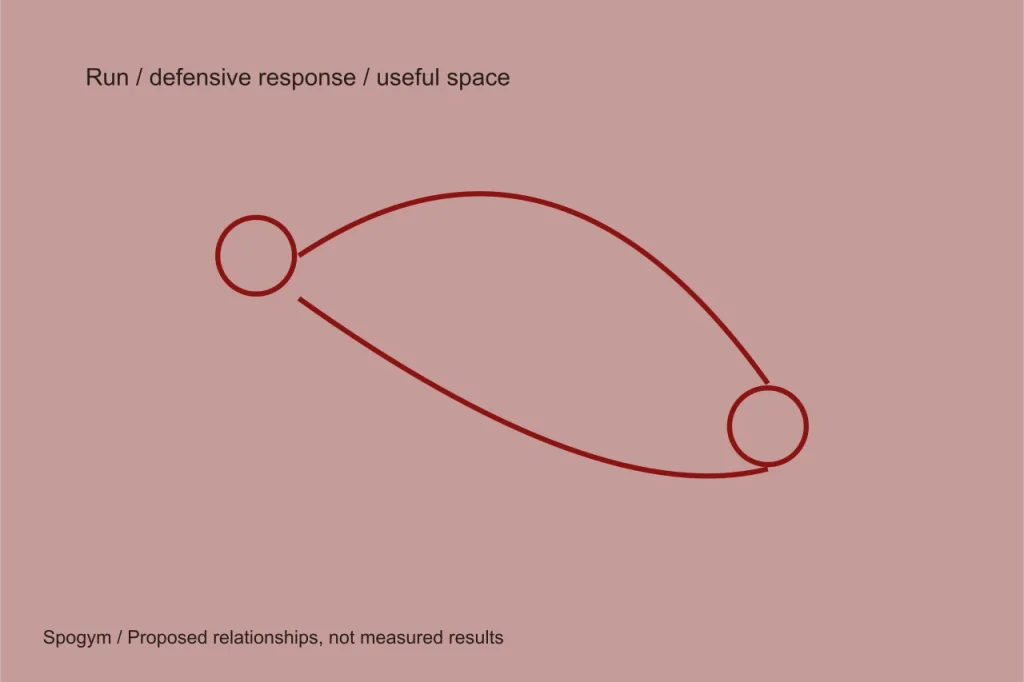
A teammate can run continuously and still contribute nothing to a possession. Movement becomes meaningful when it changes what another player can do. In the Second Read concept, an off-ball run should make space, draw a defensive response or establish a useful next position. The captain needs to understand that purpose well enough to respond, but should not receive a guaranteed scoring route simply because a teammate started an animation. This note describes a proposed relationship between team movement and player choice.
Give the run a tactical job
Consider a teammate moving away from the ball toward the opposite corner. The run may look unhelpful if the only measure is distance from the captain. Its actual purpose could be to pull a defender out of a crowded lane. That creates a different opportunity for someone else. The interface should not evaluate the runner solely by whether they receive the next pass, because doing so would erase the value of movement that supports another teammate.
A practical first scene would include one runner, one defensive reaction and one resulting change in space. We would label the intended relationship in the design document before adding extra movement. If the team cannot explain what a run changes, it may be decorative motion rather than a useful decision-making element.
Let a defender decline the invitation
The defense should sometimes refuse to follow the runner. This is not a failure of the play; it changes what the captain should notice. The moving teammate may now be available directly, while the original lane remains crowded. A rehearsed pattern provides a shared starting expectation, but the actual defensive choice determines which branch is worth considering.
That interaction is why the Playbook presents concepts as questions rather than guaranteed combinations. A play that succeeds regardless of the opposing response is effectively a performance sequence. We want a structure that creates understandable alternatives, including the option to abandon the original plan.
Make the next position matter
After a run, a teammate should arrive somewhere useful rather than freezing at the end of a path. The new position may support a return pass, protect a reset or create space for the next movement. This continuation gives the captain a reason to read the whole possession instead of treating each pass as an isolated command.
We would avoid assigning every teammate a fixed invisible obligation that the player cannot infer. Body orientation, speed changes and brief looks toward the ball can help communicate intention. Those cues need to remain readable at the chosen camera distance. A sophisticated behavioral rule is not helpful if its consequence appears as a tiny unexplained movement at the edge of the screen.
Recognise when movement closes options
Not every run improves the situation. Two teammates may enter the same useful space, or a cut may arrive after the defense has already recovered. These are opportunities for a reset rather than reasons to force the original pass. The captain’s role includes preserving a workable possession when an attractive opening disappears.
An eventual replay tool should therefore be able to explain lost options as well as successful ones. It might show how two paths converged or how a delayed pass changed the receiver’s available space. Such an explanation should focus on observable relationships and avoid declaring that an unsuccessful outcome proves the original decision was irrational.
Judge the possession as a shared sequence
The proposed review criterion is whether the player can describe why the off-ball movement mattered. A useful answer might involve a defender moving, a lane opening or a safe return becoming possible. It need not name the runner as the eventual scorer. This keeps the concept centred on team understanding rather than individual highlight moments.
These are design intentions for Second Read, not a claim that a completed simulation already produces them. The first prototype would deliberately limit the number of moving relationships so that causes remain visible. More complex patterns should follow only when the simple possession communicates its alternatives clearly, including the moment when preserving the ball is more sensible than chasing the original finish.