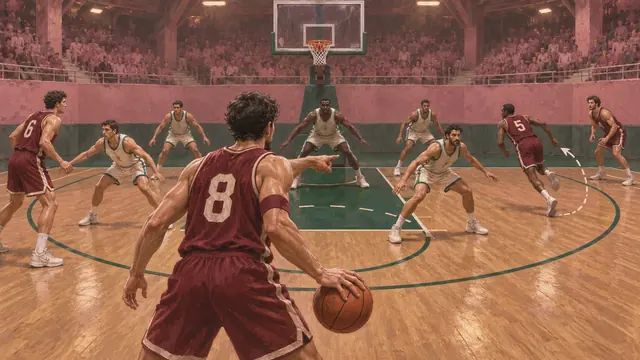
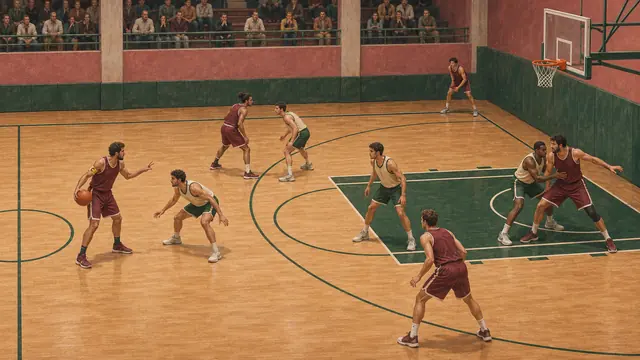
The Playbook begins with two tactical questions. What should a captain do when the first option closes? What changes when there is little time left to organise another attempt? The two concepts share a concern for team reading, but their pressure and pacing should differ. These pages describe proposed games rather than released products or simulations of real teams.
CONCEPT 1
Second Read
The captain starts with a rehearsed action and watches how the defense responds. When the expected lane disappears, another player’s movement can create a different opportunity. The intended loop rewards noticing that relationship early enough to act, rather than waiting for an automatic prompt. The Second Read dossier explains how off-ball cues, passing space and teammate expectations could support the adjustment.
A short remaining window changes the cost of another setup. The captain needs a clear primary idea and a fallback that teammates can recognise. The concept does not assume that the most dramatic shot is the best decision. The Last Possession dossier follows preparation, defensive disruption and the point at which the captain must commit to the available chance.
Both studies keep the captain’s perspective central. A tactical diagram can explain a relationship in the website’s writing, but the proposed game should make useful cues available within the player’s view. The challenge is to preserve incomplete information without making teammates behave unpredictably. Body orientation, spacing and movement timing need to communicate the same play that the captain is trying to revise.
Filter by the question
Use the concept filter to focus on reading a defense or managing a limited possession. The Captain Studies describe the design responsibilities behind those questions. The Film Room expands them into individual notes. A first prototype should make one adjustment explainable before adding a full catalogue of plays, teams or competition modes.