
The final possession needs a fallback
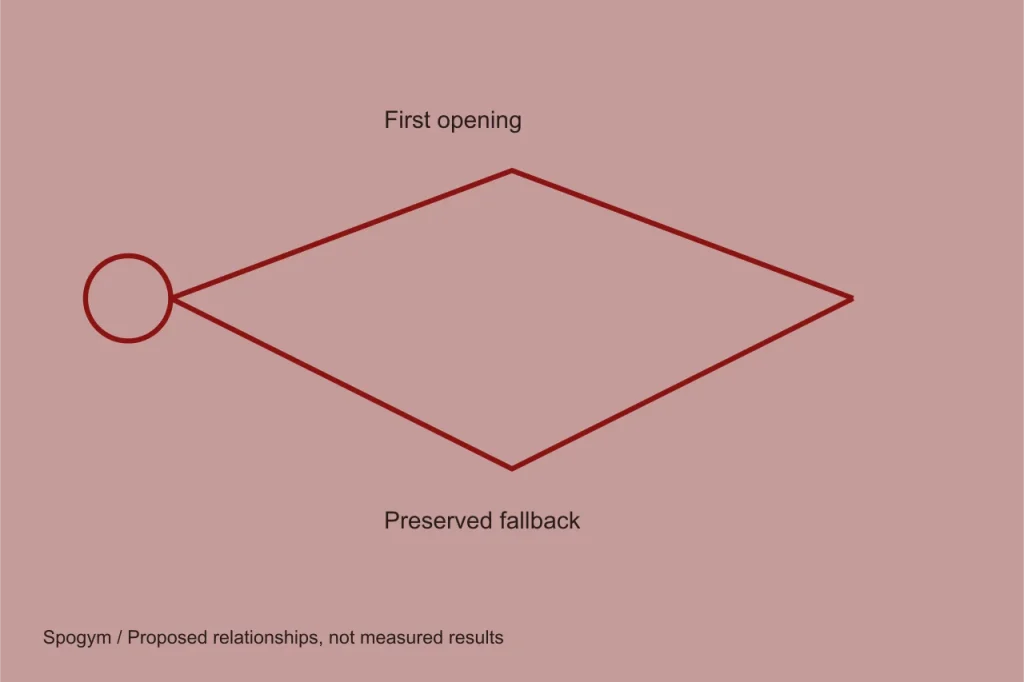
A final possession becomes less interesting when the only meaningful choice is whether the player executes a predetermined finishing animation. The pressure should come from an opportunity changing while the captain still has decisions to make. Last Possession explores a rehearsed play that can be interrupted, revised or abandoned. Its fallback is not a secret guarantee of success. It is a remaining option that the team understands well enough to attempt when the original route no longer makes sense.
Establish what the first play expects
A useful plan includes an expected pass, a movement that creates room and a recognisable moment to attempt the finish. The player should understand these relationships before the pressured sequence begins. Otherwise, disruption is difficult to distinguish from an unclear instruction. Rehearsal can introduce the shape of the play without promising that the opposition will cooperate.
In the proposed concept, the opening action might draw one defender toward the captain while a teammate changes position. The expected opportunity depends on that response. If the defender stays home, the captain needs to recognise that the original condition has not occurred. Repeating the planned input regardless should carry an understandable risk.
Preserve a second agreement
A fallback works best when it is connected to the first plan. A teammate may stay available for a short return, or another movement may preserve a wider passing angle. These positions cost something: a player held in reserve cannot simultaneously commit fully to the original finish. That tradeoff gives the team structure a meaningful shape.
The fallback should therefore be visible during the possession rather than appearing as an emergency button that summons a new opportunity. The captain may choose to keep it available or spend that flexibility on a stronger first attempt. This relationship links the concept to the broader discussion of purposeful off-ball movement.
Let pressure narrow the choices honestly
As the possession develops, some options disappear. A pass may no longer leave enough time for another adjustment, or a teammate may have moved beyond a useful return angle. Those losses should follow the visible sequence. We would avoid silently disabling an action merely because a dramatic ending is about to play.
The player also needs to understand the distinction between a low-quality remaining chance and no chance at all. A hurried attempt can be a rational response to limited options without being presented as an ideal decision. The game’s explanation should preserve that nuance instead of treating every unsuccessful finish as proof of a mistake.
Make the reset a real decision
A reset may protect possession while sacrificing part of the planned opportunity. Under enough pressure, it may no longer be useful. The captain should be able to read that change through the players and remaining space, supported by clear time information where appropriate. The interface must not hide the cost until after the reset has been chosen.
In a first prototype, we would keep the sequence short enough to inspect each branch. One disrupted opening and one plausible alternative can reveal more about the design than a large collection of scripted endings. Additional variations should come from different defensive responses, not simply from attaching a different animation to the same decision.
Review the choice before the result
An eventual review should pause before the outcome and identify what the captain could see. Was the first opening still available? Was the fallback preserved? What did another pass cost? These questions help distinguish decision quality from the final result. A reasonable attempt can fail, and an awkward choice can occasionally succeed.
The Last Possession dossier describes the concept’s intended loop and current stage. This note adds a narrower testable question: can the player explain why the fallback became preferable, and what was given up to keep it available? Until that relationship is clear, adding more spectacle would decorate a sequence whose central sporting decision remains unresolved.