
A captain view is not an overhead answer
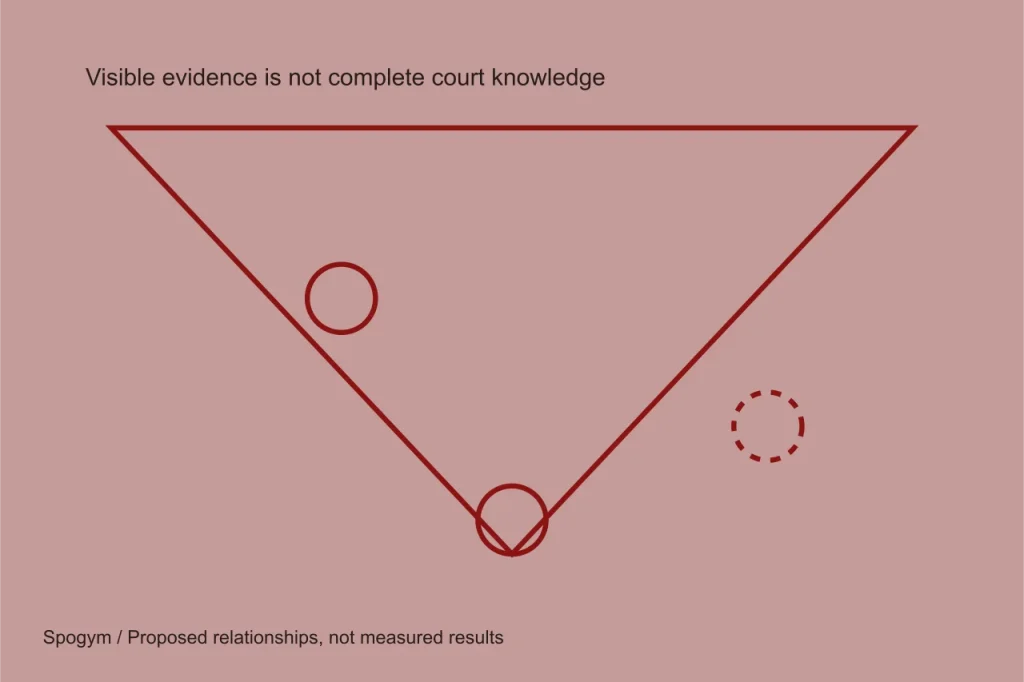
An overhead camera can display every player and every lane at once. A captain’s perspective offers a different experience: the player must understand a developing possession while remaining connected to one position inside it. That limitation can create interesting decisions, but it can also become an excuse for hiding essential information. Spogym’s proposed captain view needs to distinguish useful uncertainty from avoidable obscurity. The goal is not to make the court harder to see; it is to make attention feel situated.
Decide what the captain could know
The camera should begin from the information needed for the current decision. A nearby defender, the intended receiver and the space between them usually matter more than a distant decorative detail. A modest adjustment could keep those relationships visible without expanding into a perfect tactical map. Camera behavior should serve the decision rather than compete with it through constant cinematic movement.
The captain may reasonably lose sight of a distant teammate for a moment. That does not justify making the teammate’s important action completely unknowable. A visible preparation, a sound cue or a predictable continuation can preserve context. Such cues should communicate intention without announcing a guaranteed outcome from beyond the player’s view.
Avoid automatic omniscience
A camera that swings toward the correct receiver before the player notices an opening is effectively a tactical prompt. It may be useful in a learning mode, but it changes the underlying decision. We would separate that kind of guidance from the default presentation so that the game does not silently solve its own central challenge.
The note on reading the defense before the prompt explores the same issue through interface timing. Camera movement can answer a question just as strongly as a highlighted button. Both systems need to be reviewed together, because a restrained interface does little good if the framing constantly reveals the preferred action.
Keep important movement large enough
Readable positioning depends on more than field of view. Player silhouettes, contrast against the court and the size of a change in direction all affect what can be understood. A tiny shoulder movement may be meaningful in the design document yet disappear on a smaller screen. We would rather exaggerate an appropriate preparation than require the player to decode an invisible detail.
This does not mean every action needs a large gesture. The visual hierarchy should reserve the strongest cues for decisions with immediate consequences. Secondary movement can stay quieter. Testing should include smaller displays and reduced visual clutter so that the core relationships are not accessible only under ideal viewing conditions.
Let a replay explain rather than accuse
After a possession, a replay may use a wider view to explain what happened. It must distinguish this retrospective view from the evidence the captain actually had. Otherwise, the review can unfairly criticise a choice using information that was unavailable during play. A useful explanation would first replay the original view, then optionally reveal the broader relationship.
We would also preserve the timing of uncertainty. If a teammate’s route became clear only after the ball left the captain’s hands, the replay should not present that later certainty as something the player should have known earlier. A fair review separates a poor read from a reasonable decision that met an unexpected response.
Start with a limited camera experiment
The first planned comparison would use the same short possession with a small number of camera positions. We would examine whether each view exposes the relevant defensive change, preserves orientation and leaves room for the captain to choose. No measured results are claimed here; these are criteria for a future prototype exercise.
Both Second Read and Last Possession depend on that balance. The first needs readable alternatives after an opening closes. The second needs a clear sense of remaining opportunity without turning the final sequence into an overhead puzzle solved by the camera. A grounded viewpoint should make the captain’s responsibility understandable, not merely make the player work harder to locate the ball.